top of page

𝗟𝘂𝗺𝗶𝗻𝗼𝘂𝘀 𝗟𝗮𝘆𝗲𝗿𝘀: 𝗔 𝗝𝗼𝘂𝗿𝗻𝗲𝘆 𝗧𝗵𝗿𝗼𝘂𝗴𝗵 𝗠𝗲𝗺𝗼𝗿𝘆

𝗯𝘆 𝗠𝗮𝘀𝗮𝘆𝗼𝘀𝗵𝗶 𝗡𝗼𝗷𝗼 𝗮𝗻𝗱 𝗧𝗼𝘀𝗵𝗶𝗼 𝗜𝗲𝘇𝘂𝗺𝗶

𝗖𝟭𝟰 𝗗𝘂𝗼 𝗣𝗿𝗼𝗷𝗲𝗰𝘁𝘀, 𝗔𝗿𝘁 𝗖𝗲𝗻𝘁𝗿𝗮𝗹 𝗛𝗼𝗻𝗴 𝗞𝗼𝗻𝗴

𝗠𝗮𝗿𝗰𝗵 𝟮𝟰–𝟮𝟵, 𝟮𝟬𝟮𝟲


Our past serves as a conduit to the future, shaping our perceptions and unfolding visions. Memory lingers in materials, surfaces, and light, quietly shaping how we encounter the present and sense what is yet to emerge.

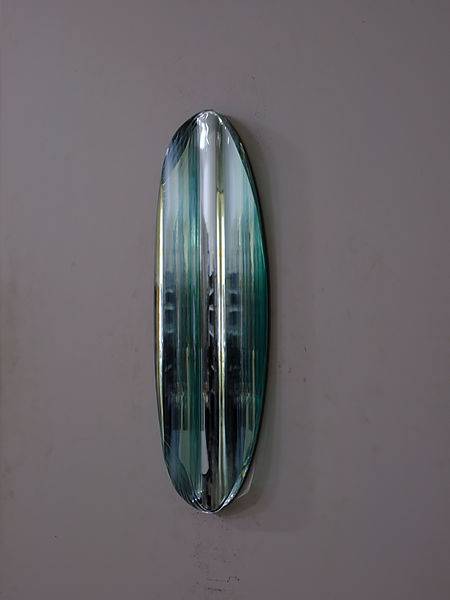
"Move M.1401001" by Toshio Iezumi

Medium: Plate Glass, Mirror, Handmade & Polished on Stainless Steel Base

Dimension & Year: 200 x 16 x 12 cm, 2014

For Duo Projects, Parallel + presents a focused dialogue between Masayoshi Nojo and Toshio Iezumi, bringing together Rinpa-inspired painting and sculptural glass. Their practices engage memory not as nostalgia, but as an active force, one that carries tradition forward while opening space for innovation. Through distinct yet resonant mediums, both artists draw from historical techniques and aesthetics, transforming them into contemporary expressions that feel at once familiar and newly revealed.


A sensitivity to impermanence quietly permeates this presentation. Shifting light, reflective surfaces, and subtle material changes echo the passing of seasons and the transience of lived experience. Here, memory remains fluid, never fixed, continually dissolving into the present while gesturing toward what is yet to come.​​

Flicker 2 by Masayoshi Nojo, 2026, Acrylic Board on Panel, Transparent Film, Acrylic, Silver Leaf, Aluminum Leaf, 120 x 25 x 10 x 5 panels.jpg

"Flicker #2" by Masayoshi Nojo

Medium: Acrylic Board on Panel, Transparent Film, Acrylic, Silver Leaf, Aluminum Leaf

Dimension: 120 x 25 x 10 x 5 panels in Acrylic Box

Rooted in Japanese art history, Masayoshi Nojo’s practice draws from the luminous legacy of the Rinpa school, particularly the marbled silver rivers of Ogata Kōrin from the Edo period (17th century). Through the use of silver leaf, highly responsive to light, air, and oxidation, time itself becomes perceptible. As surfaces gradually shift and transform, they hold the quiet accumulation of memory.

For Duo Projects, Nojo presents works from his Mirage and Flicker series. In Mirage, he conjures a sense of déjà vu, images that hover between recognition and dissolution, where memory feels near yet elusive, extending Rinpa sensibilities into the present. Flicker buildsupon this process, unfolding landscapes through subtle chromatic transitions. Here, folded, three-dimensional surfaces partially veil the silver foil, allowing underlying hues to surface and move from morning light toward the stillness of night, quietly tracing the passage of time.

“Mirage #122"

Medium: Cotton on Panel, Acrylic, Silver Leaf, Aluminum Leaf

Dimension & Year: 105 x 80 cm, 2025

Rooted in Japanese art history, Nojo’s use of silver, ethereal and shimmering, is particularly reminiscent of Ogata Kōrin’s celebrated work during the Edo Period in seventeenth-century Japan. Kōrin’s marbled silver rivers, often painted upon byōbu folding screens, were symbolic of the flow of time due to the changing colour of the metal oxidising. 

“Mirage #121"

Medium: Cotton on Panel, Acrylic, Silver Leaf, Aluminum Leaf

Dimension & Year: 110 x 150 cm, 2025

Material memory likewise defines Toshio Iezumi’s sculptural glass works. Through the careful lamination of glass sheets and the use of traditional stone-carving tools, he develops forms that hold depth, reflection, and transparency in delicate balance. Influenced by the minimalist sensibilities of Donald Judd, the organic abstraction of Constantin Brâncuși, and the ceremonial depth of ancient Chinese bronzes, Iezumi’s sculptures are exercises in restraint, balance, and depth.

Each piece begins as a cuboid mass of carefully bonded glass plates, assembled with precision into a single body, then cut, shaped, and polished through a painstaking seven-stage process involving successively finer abrasives and a final cerium oxide buff. This labor-intensive technique reveals what the artist calls“ green transparent internal space,” an effect that emerges as concavities and convexities subtly disrupt the uniformity of the glass’s transparency.

For Duo Projects, Iezumi presents works developed through a newly discovered laminating technique that introduces a seamless emerald-green nuance within the glass. The presentation includes pieces from the Move series, inspired by the cascading flow of waterfalls, including a monumental work that was part of his extensive survey exhibition at the Toyama Glass Art Museum in 2017; Projection, which subtly distorts the surrounding environment; as well as works from the Form and Floating series, each extending his exploration of light, movement, and spatial perception.

For over four decades, Iezumi has bridged ancient glass techniques with contemporary expression, maintaining a practice marked by quiet precision and a singular vision.

Light and depth are fundamental to Iezumi’s sculptural practice. Through carving and polishing laminated glass, he creates shifting layers of reflection and refraction.

“Form 2609.F”

Medium: Plate Glass, Handmade, Carved & Polished

Dimension & Year: 16H x 33W x 33D cm, 2026

Grind to Form, an extensive survey exhibition of Toshio Iezumi Exhibition at Toyama Glass Art Museum in 2017

Photo courtesy of the artist & Toyama Glass Art Museum

My conceptual approach to the color of sheet glass

On the Pale Dark Green


In my sculptures, the pale dark green of the glass is not a chromatic choice but a structural condition. This tint results from iron content and thickness; it is not applied to the surface but

generated from within the material itself. It belongs to the material as such. In this sense, it

is not representation but manifestation.


Yet perception does not register it merely as information about composition. Instead, it is immediately read as “glassness” — a condensed sign of coolness, tension, brittleness, and resistance. Here, material fact begins to operate as perceptual texture.

The green edge is a visible index of thickness. However, thickness is not experienced

quantitatively. It is translated into bodily anticipation: the sense of a stretched membrane,

the imminence of fracture, a contained internal stress. Material density becomes affect.

Sheet glass is radically smooth, nearly without form, seemingly without mass. It approaches invisibility. And yet the faint green at its edge reintroduces material presence. A medium that aspires to transparency reveals its own opacity through color. What appears immaterial asserts its material condition.


This process is also mnemonic. Our accumulated encounters with windows, vitrines, and broken shards are sedimented in perception. The slightest tint activates these memories. Texture, therefore, is not surface decoration but the reactivation of embodied knowledge.


If stone articulates mass through shadow, glass articulates mass through chromatic density. But whereas stone suggests weight, glass suggests tension — not gravity but vulnerability. Its presence is defined by the possibility of rupture.


The pale green is thus not merely color. It is an index of ontological condition: thickness, coolness, imperfect transparency, and latent fracture.


Materiality becomes perceptible precisely at the moment when matter turns into perceptual structure.

Toshio Iezumi 1.png
Toshio Iezumi 3.png

About Toshio Iezumi

Toshio Iezumi (b. 1954) is a world-renowned glass sculptor recognized for developing a unique technique for shaping glass by laminating sheets of glass into a bloc, then carving and polishing it with stone carving tools. Influenced by ancient Chinese bronzes as well as the works of Brâncuşi and Donald Judd, Iezumi’s technique of direct curving and dealing with light reflection and refraction seeks to illustrate volume and depth as it occurs in the glass.


lezumi employs angle grinder as a tool for shaping glass. He is a master of this technique which requires extensive experimentation in grinding and polishing the glass surface and the use of heat reflective glass, which traces the concavities and convexities that spread like ripples of water.

Iezumi is a multi-awarded artist who has received numerous honors throughout his career, including the Gold Prize at the ’86 Takaoka Crafts Exhibition, the Suntory Prize, and the prestigious Fugaku Biennale Award at the Shizuoka Prefectural Museum of Art. His glass works have been exhibited internationally, including at the Toyama Glass Art Museum in Japan and the annual Sculpture by the Sea in Australia. His works are held in the permanent collections of the 21st Century Museum of Contemporary Art, Kanazawa, the National Museum of Modern Art, Tokyo, the Tochigi Prefectural Museum of Fine Arts, the Toyama Glass Art Museum, the Corning Museum of Glass, the Museum of Fine Arts, Boston, the Los Angeles County Museum of Art, the The Henry Ford, and the Real Fábrica de Cristales de La Granja.

His works have also been commissioned by institutions including the Shangri-La Tokyo, the Cerulean Tower Tokyu Hotel, Park House Geo Rokobrancho Tokyo, the Hilton Odawara Resort & Spa, Sanyo Gakuin University in Okayama, and The Senri Residence Osaka.

Understanding Masayoshi Nojo’s Practice through His Rinpa-Inspired Painting

Video courtesy of of Masayoshi Nojo / WHAT MUSEUM / Ryuichi Maruo

He is particularly interested in collective memory—how landscapes and natural forms can evoke memories shared across individuals. Through the abstraction of photographic imagery, he transforms familiar scenes into atmospheric compositions that hover between reality and recollection.

Masayoshi Nojo 5.png

Excerpt adapted from the Metropolitan Museum of Art on Rinpa Painting Style


The Rinpa School (also pronounced Rimpa) was an important part of the Edo-period revival of indigenous Japanese artistic traditions known as yamato-e. Paintings, textiles, ceramics, and lacquerware produced by Rinpa artists are distinguished by vibrant colors and richly decorative, patterned compositions. Favored themes—often evoking nature and the changing seasons—were drawn from classical Japanese literature, particularly The Tale of Genji, The Tales of Ise, and poetry from the Heian period composed by court aristocrats.


Text attribution is given to the Department of Asian Art, The Metropolitan Museum of Art, New York, October 1, 2003.

About Masayoshi Nojo

Masayoshi Nojo (b.1989, Japan) completed his MA in Japanese Paintings in 2015 from the Kyoto University of Art and Design. With his unique and complex techniques, he combines contemporary visual languages with Japanese aesthetics, exploring the themes of memory and the passage of time.


Rooted in Japanese art history, Nojo’s use of silver, ethereal and shimmering, is particularly reminiscent of Ogata Kōrin’s celebrated work during the Edo Period in seventeenth-century Japan. Kōrin’s marbled silver rivers, often painted upon byōbu folding screens, were symbolic of the flow of time due to the changing colour of the metal oxidising. This depiction of time has since been adopted as a motif by artists worldwide such as Gustav Klimt and has become a cornerstone of a form of Japanese art known today as Rinpa (literally meaning“ school of Kōrin”). With his most recent series, entitled Mirage, Nojo uses this sense of time to conjure a sense of dèja vu in the viewer, evoking a memory tantalisingly close, yet just out of reach.

The artist has presented his work in numerous exhibitions in Japan and internationally, establishing a strong presence within the contemporary art scene.


His practice has been recognized with several prestigious awards, including the Sagawa Art Museum Eiichi Kuriwada Special Award (2014), the Academic Prize at the Kyoto University of Art and Design Graduation Exhibition (2013), the Grand Prize at the Turner Award (2013), and the Grand Prize at the Art Bar Competition (2013). Earlier distinctions include the Seison Maeda Prize (2012), the World Painting Grand Prize (2012), and the Grand Prize at the Tadasu no Mori Dessin Contest (2009). His work was also selected for Tokyo Wonder Seed in 2013.


His works are held in several notable public and institutional collections, including the Sagawa Art Museum in Shiga, the Ueshima Museum Collection in Tokyo, The Prince Gallery, Marriott Hotels in Tokyo, Hotel Mystays Premier Group in Japan, Universal Music LLC in Tokyo, and OCA TOKYO.

Masayoshi NOJO.jpg

Upcoming

In Quiet Becoming
San Francisco Art Fair
Fort Mason Festival Pavilion, 2 Marina Boulevard
San Francisco, CA 94123
April 16–19, 2026

Bringing together artists from Japan, Hong Kong, and the Philippines, this presentation highlights a pivotal moment in their respective practices, a new chapter shaped by risk, experimentation, and renewed clarity. Completing the presentation is a design console by Estudio Material, the San Francisco–based practice led by Mexico City–born artist and designer Damaso Mayer, whose work draws from industrial design, architecture, and landscape architecture.

In a city defined by thresholds, land and water, fog and clarity, natural terrain and constructed form, the presentation resonates with its surroundings. The works assembled here are not bound by a single narrative. Instead, they orbit a shared sensitivity to nuance. Materials absorb, reflect, filter, and refract. Surfaces hold traces of gesture. Forms hover between emergence and dissolution. What appears restrained reveals complexity through sustained looking.

For more information: https://sanfranciscoartfair.com/

...

Estudio Material by Damasco Mayer.jpg

@2026 Parallel + art & design

bottom of page